skip to main |
skip to sidebar
 Click on the image to download the free guide
Dyslexia causes difficulties in learning to read, write and spell. Short-term memory, mathematical ability, concentration, personal organisation and sequencing may also be affected.Dyslexia usually arises from a weakness in the processing of language-based information. Biological in origin, it tends to run in families, but environmental factors also contribute. Dyslexia can occur at any level of intellectual ability.
Source:
Dyslexia Action
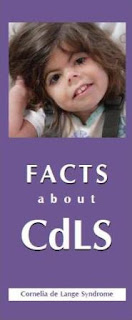 Click on the image to download fact sheet.
As with other syndromes, individuals with CdLS strongly resemble one another. Common characteristics include: low birthweight (often under five pounds), slow growth, small stature, and small head size. Typical facial features include thin eyebrows (which frequently meet at the midline), long eyelashes, a short upturned nose, and thin downturned lips. Other findings may include excessive body hair, small hands and feet, partial joining of the second and third toes, incurved fifth fingers, a cleft palate, and conditions such as gastroesophageal reflux, seizures,
feeding difficulties, eye problems, hearing loss, behavioral issues, and developmental delays. Limb differences, including missing limbs or portions of limbs (usually fingers, hands, or forearms) are also found in some individuals.
Source:
Cornelia de Lange Syndrome Foundation
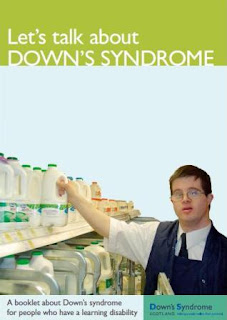 Click on the image to download booklet
This booklet is for people with a learning disability.
It will tell you about Down’s syndrome.
Source:
dsscotland.org.uk
 Click on the image to download booklet
The purpose of this booklet is to provide school staff with information about ADHD and how children with the condition can be helped in school.
Source:
selb.org
Download Adobe Reader
here.


 Posts
Posts


